About the store
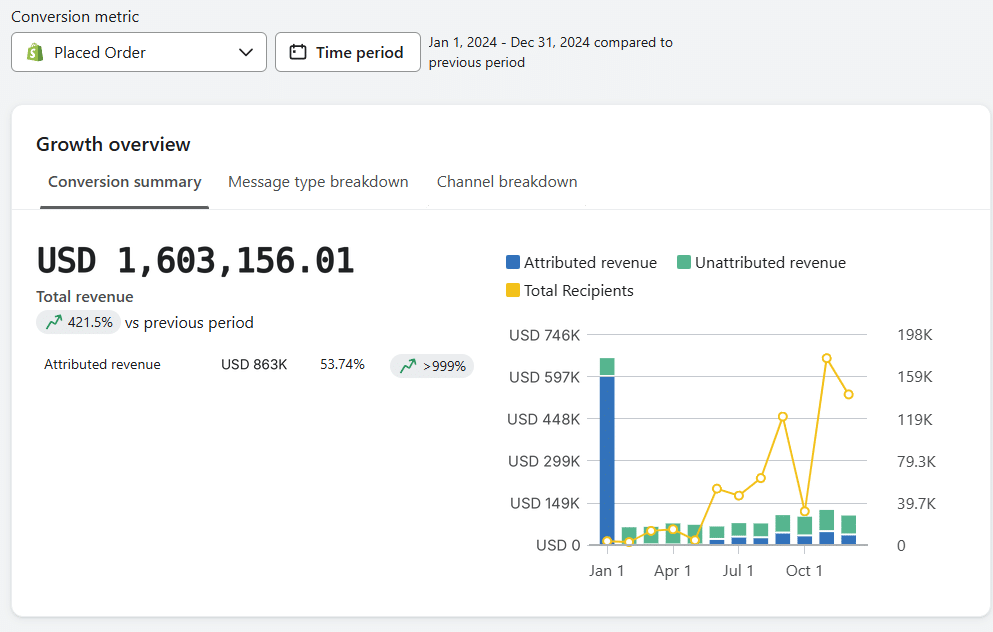
The store runs on Shopify, and a large part of its range is its own or exclusively distributed products. In 2024, the store’s revenue was $1.6 million.
Creative freedom
As with many of my other clients, the challenge here was a lack of capacity for running email campaigns, collecting subscribers and analysing data. For me, one of the biggest advantages of our work together is that I was given a completely free hand.
I decide when and which campaign starts, who it goes to and what the emails contain. I can’t imagine a better working relationship.
One of the best examples: my contact, the head of online sales, and I didn’t talk for more than two months (neither by email nor by phone). That wasn’t a problem – it meant everything was running smoothly.
Sales from email grew month after month, and I sent regular reports on them.
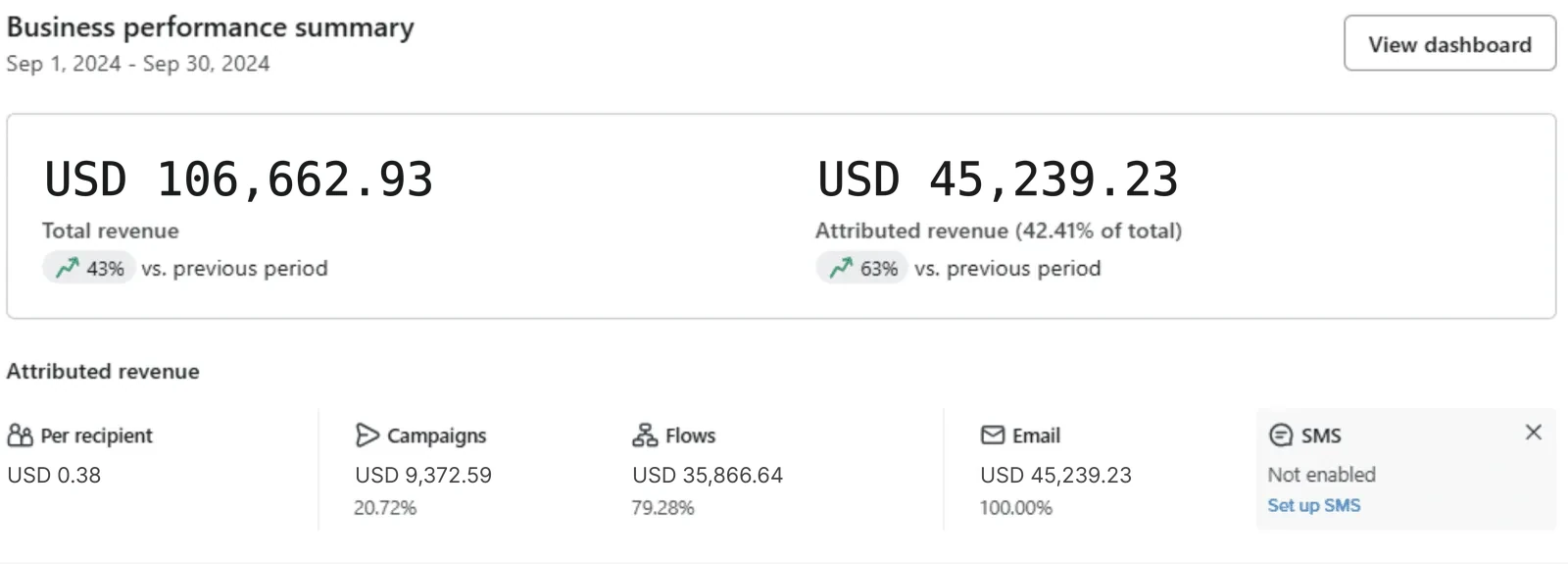
Results in an average month
On a normal day, 11 automated email marketing flows run (which I keep expanding and improving), and about once a month we run a campaign of a few days for our subscribers. These campaigns bring 8–15% of total monthly revenue, and the automated flows 28–35%.
Overall, 35–50% of the store’s revenue comes from email subscribers. In an average month, 2,500–3,500 new subscribers join (people who have never bought from the store). The store’s average monthly revenue is close to $120,000.
Average order value
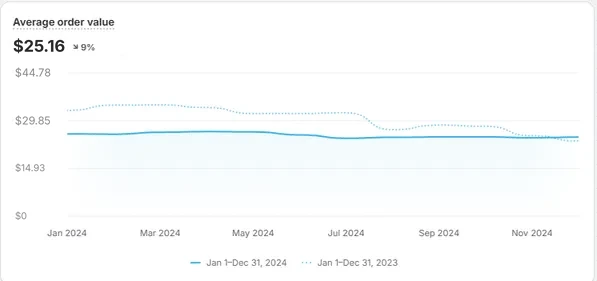
The average order value in 2024 was $25.16.
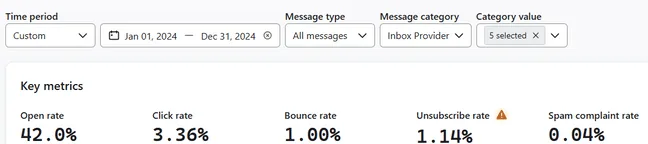
Average email campaign statistics in 2024
Black Friday, November 24, 2023
I have been working with the client since spring 2024, so I didn’t build the previous year’s campaign, and Klaviyo wasn’t in use back then, so I have no insight into those campaigns. All I know is that between November 20 and 25, 2023, the store received 445 orders in total.
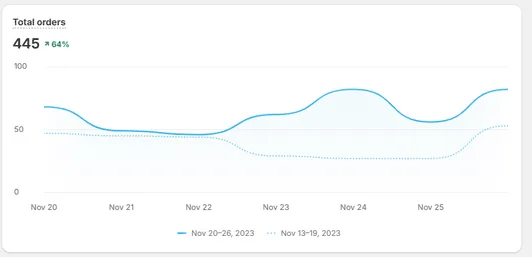
Available data
We had run many A/B tests, which gave us a deeper than average understanding of our audience. We used this knowledge in the Black Friday campaign too, especially for choosing send times, setting the right discount level, the format of subject lines and the best order of blocks in the email.
Black Friday, November 29, 2024
Preparation
For a major campaign we usually start preparing 1–2 months in advance, because careful planning is needed to make full use of all the data and tools we have. With them we plan the flows, the campaigns, and the creatives and copy that go with them.
This year, however, that wasn’t possible: all I knew in advance was that there would be “something” on Friday. I only learned the details one day before the campaign, so I had to rework several preparation steps because of the lack of time.
The “something” – thrown in at the deep end
I received the campaign brief at extremely short notice, at 9:30 AM on November 28. According to it, we would give a 20% discount on three product categories, applied automatically from midnight, without a coupon.
On top of that, an extra stackable 5% discount was available on every product. The instructions also said there would be no paid ads this year; only social media posts would support the campaign.
The campaign lasted just one day: Friday, November 29, from midnight to midnight. No PPC ads ran for the Black Friday campaign; only organic social media posts went out.
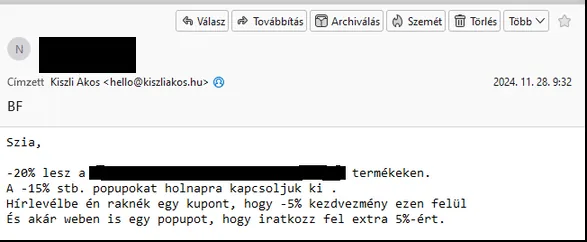
Tools – website
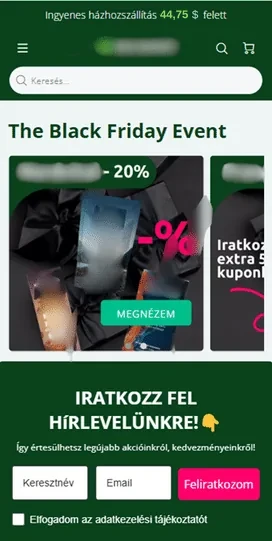
A colleague designed the hero section so that it could hold both the main campaign message and the sign-up block. The landing page switched to the campaign content automatically at exactly midnight, then switched back to the original version when the campaign ended.
Black Friday landing page – desktop
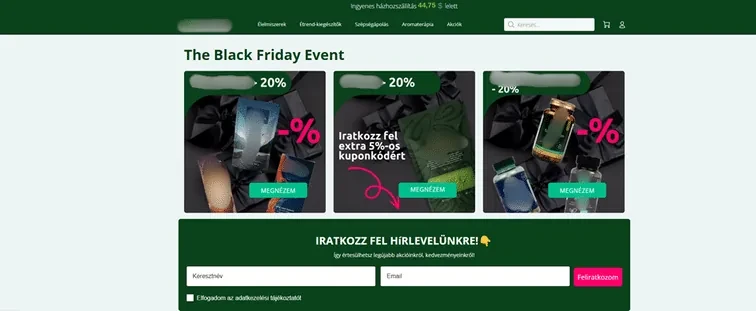
Black Friday landing page – mobile
Tools – Klaviyo
The whole campaign had to be run from Klaviyo; no other tool was available.
KPIs
I got the classic small-business KPI for the campaign: as many sales as possible. :) For myself, I tried to set achievable targets for the whole campaign:
New subscribers: 150. Revenue from flows: $2,985. Revenue from campaigns: $11,940. Orders: 300. Open rate: at least 35%. Click rate: at least 1.5%. Unsubscribe rate: at most 1.5%. Spam complaint rate: at most 0.05%.
Strategy
Since I knew in advance that we were preparing for a Black Friday campaign in November, I deliberately scheduled the last discount promotion for the end of September. I based the campaign plan on the lessons of earlier campaigns and on my own experience.
When an important campaign has to be put together so suddenly, it is especially important to minimize the chance of errors. Mistakes made in a hurry can easily damage a brand’s reputation in email marketing, so the main priority is that everyone gets the right message at the best possible time.
A maintained database
Unexpected situations like this also show why regular list maintenance and cleaning is essential. For this client, too, I clean the database every month: I remove bounced addresses and inactive subscribers who haven’t opened a single email for at least three months.
Thanks to this, the Black Friday campaigns went to a database in which most subscribers are active.
But list maintenance has technical and financial reasons as well as strategic ones. Email marketing platforms usually charge by the number of subscribers, so keeping inactive addresses can mean unnecessary costs. Technically, regularly sending to an inactive database lowers your sender reputation over time. This can easily lead to a growing share of your emails landing in the spam folder.
List growth
I planned three sign-up options during the Black Friday campaign: an embedded form on the home page and two popups.
Automations
I came up with two simple flows, each consisting of one email: abandoned cart and a post-sign-up email.
Campaigns
Based on my experience so far, I planned to send 2+1 emails: one in the morning and one in the evening, a few hours before the discounts expired. The +1 was an afternoon email, and whether it went out depended on how the morning email performed.
When a one-day discount falls on a working day, an afternoon send almost always performs worse than a morning or evening one. People are at work, busy, not in shopping mode.
But such an email can still help people not forget the sale, and inform them a little about our products – give them some content. If this message also just says “redeem your discount” instead of offering content, we will definitely increase unsubscribes, since they won’t buy now anyway and we have been repeating the same message since the morning.
Carrying out the strategy
Step 0 – Scheduling the existing processes
I set all active popups, embedded forms and flows to stop at exactly midnight on November 29 and restart at midnight on the 30th. This ensured that during the campaign only the messages I had planned could go out.
Step 1 – Tagging
I tagged every Black Friday campaign element with “BF2024”, so they would be easier to tell apart in the statistics later, and so that on the campaign day I would only see campaign-related elements. That way I can react faster if anything happens.

Step 2 – List
I created a new list (BF2024:SUBSCRIBERS) with double opt-in turned off. I did this so that we could reach as large a database as possible. This list was only open for sign-ups during the campaign period.
TIP: Double opt-in is not required by the GDPR. The sign-up method is a question of email marketing strategy.
Step 3 – Preparing the graphics
Because of the lack of time, I couldn’t get help from a designer, so I made the images myself in Canva.
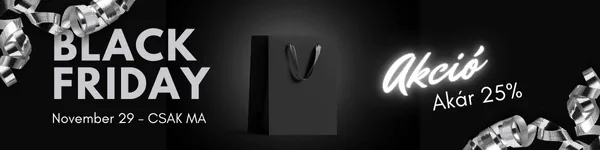
Email header banner – 600x150px
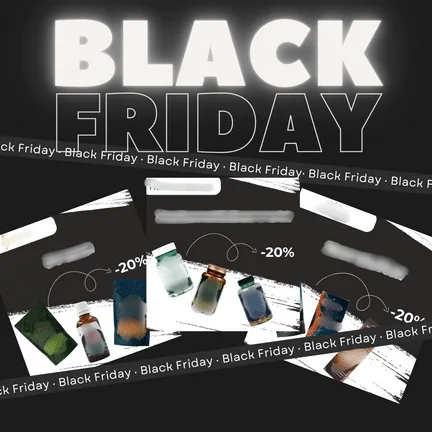
Popup and email graphic – 1080x1080px
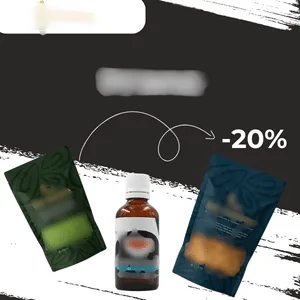
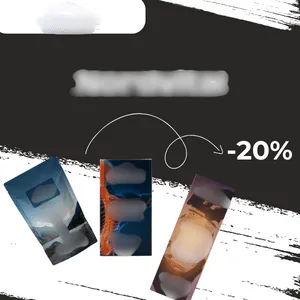
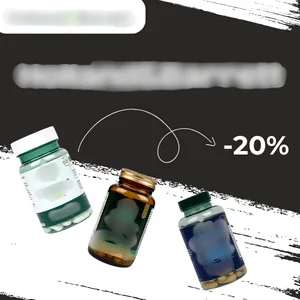
Step 4 – Building the form and popups
4a – Form
I built the embedded sign-up form on the Black Friday home page (BF2024:LANDING) and placed its ID code on the pre-scheduled landing page. People who filled in the form were subscribed to the BF2024:SUBSCRIBERS list created earlier.
I scheduled the form to be active from midnight and to switch off at midnight on the 30th. This wasn’t strictly necessary, since the landing page was scheduled too, but you can never be too careful.
4b – Popups
Global settings: they could only appear to new visitors, not on the cart and checkout pages; they also appeared on exit intent, and each visitor could see them only once. In both popups, people subscribed to the BF2024:SUBSCRIBERS list.
Home page popup (BF2024:MAINPAGE)
Since the hero contained the embedded sign-up block, I set the trigger so the popup only appeared if the visitor had scrolled at least 30% of the page and hadn’t subscribed yet. I did this in case someone hadn’t seen the embedded form. The popup could only appear on the home page.
Subpage popup (BF2024:SUBPAGES)
It appeared if someone had been on the site for at least 20 seconds and had already accepted cookies. In Klaviyo you can write custom popup triggers in JavaScript, which is how I made it appear after cookie acceptance.
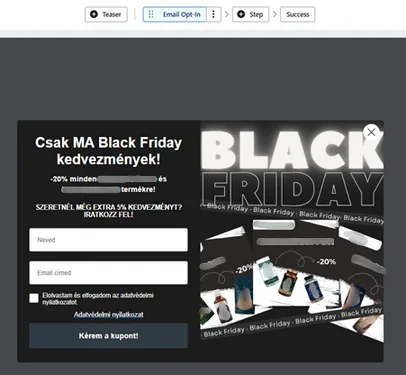
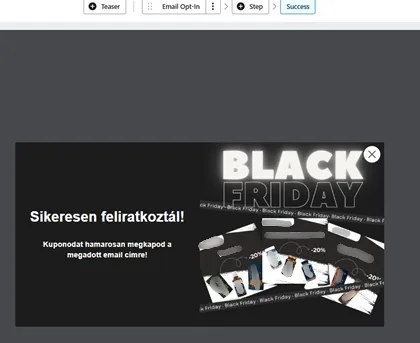
TIP: We almost never show a coupon in a popup (there can be exceptions); the discount is always sent by email. There are two main reasons: 1. Avoiding fake email addresses: people often enter an address that doesn’t exist (e.g. asd@asd.com), copy the coupon and then use it with their real email address at checkout.
That way they avoid receiving newsletters, which hurts the quality of your database in the long run. 2. Improving email reputation and deliverability: a discount sent by email is key for your reputation.
When someone subscribes, opens the email with the discount and maybe clicks through, the algorithm rates the email positively. This not only improves your reputation but also increases the chance that your next email lands in the Primary inbox rather than the Promotions tab.
Step 5 – Flows (automations)
Flows (automations)
Because of the lack of time, two simple automations were created. Both were activated at midnight on the 29th and deactivated at midnight on the 30th.
Abandoned cart (BF2024:ABANDONEDCART)
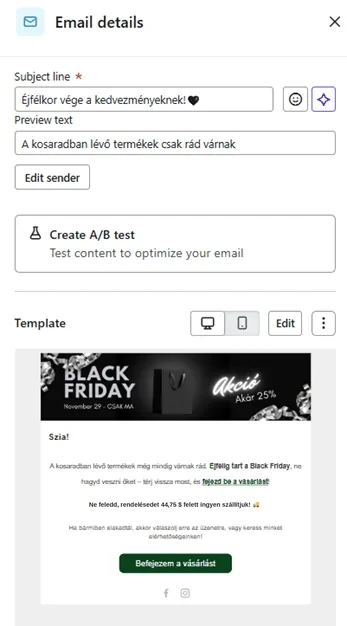
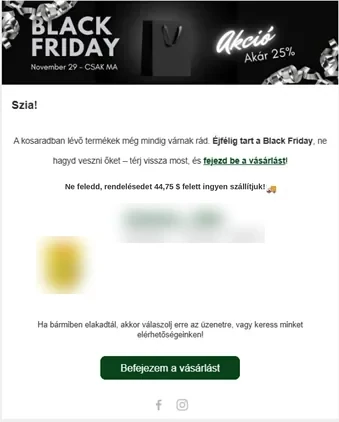
If a visitor started checkout but didn’t finish within 2 hours, they got a reminder email with the Black Friday header, so they wouldn’t forget to order the product – it’s only on sale today. CTA: a link back to the cart.
New subscribers (BF2024:SUBSCRIBED)
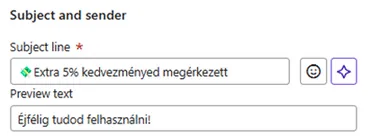
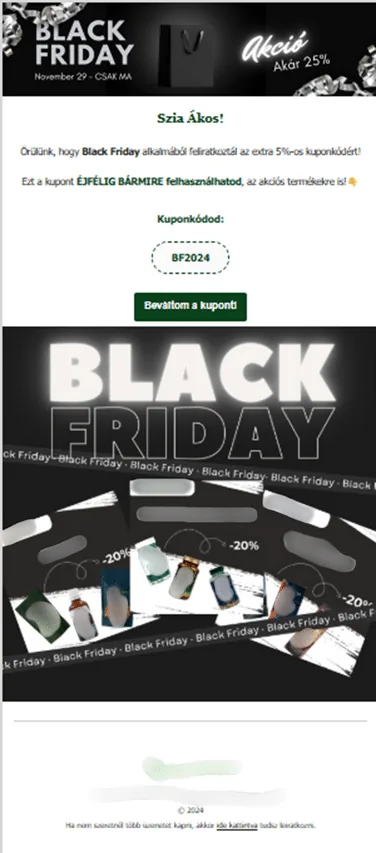
Everyone who subscribed via a popup or form got it immediately. When people subscribe in exchange for a coupon, we never make the first email long, because all anyone cares about is the “reward”. In this email, too, I only gave the subscriber the essential information: until when and on what they can use it, plus the coupon code. The CTA took the reader to the store’s home page.
TIP: Always have a campaign landing page where every discount can be found in one place, and send subscribers there. Unfortunately there wasn’t one this time, so I sent them to the home page, where the sale categories were linked in the hero.
Step 6 – Building segments
Building segments is one of the most important parts of email marketing. It’s important to distinguish segments from lists.
Lists are static databases: subscribers get onto a list once (whether they subscribe themselves or we add them manually) and stay there until they unsubscribe or we delete them.
Segments, on the other hand, are dynamic lists built on conditions. Segment members are the subscribers who meet the given conditions. If the conditions no longer apply to a subscriber, or their situation changes in the meantime, they automatically leave the segment.
There can be many reasons to build segments, and you can build them in practically endless ways – only your creativity sets the limit.
One basic truth about segments: the better you build a segment, the better you can communicate, because you know exactly what that segment needs, so the message will convert better.
We also often use segments for statistics, as in our case. Building the segments alone would have taken all my time, never mind writing different copy for each. Statistical segments give us a lot of important information, and we can draw many conclusions at the end of the campaign.
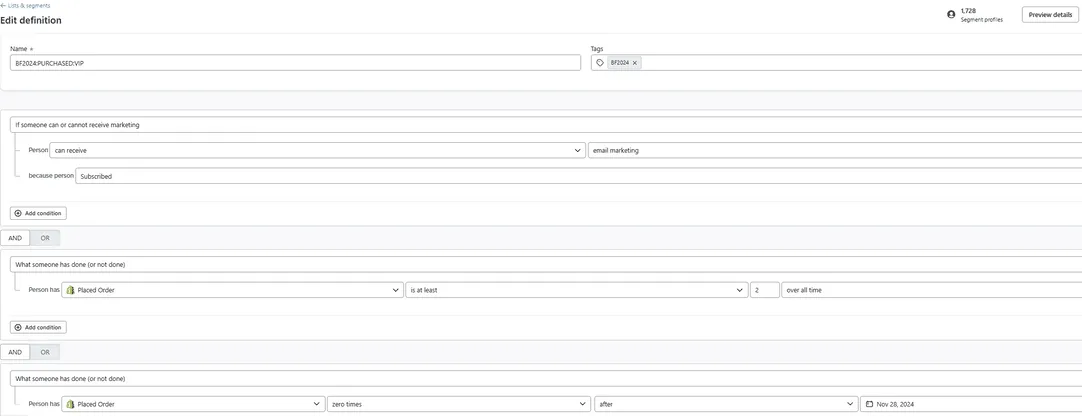
I built the following segments for the Black Friday campaign:
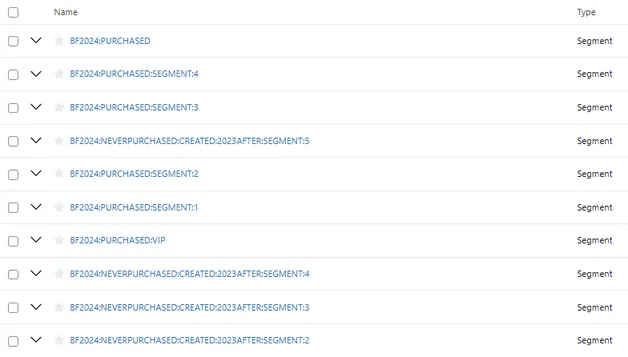
1. VIP (BF2024:PURCHASED:VIP): placed more than two orders in the store. 2. Bought once (BF2024:PURCHASED:SEGMENT:1-4): 4 segments. 3. Never bought (BF2024:NEVERPURCHASED:CREATED:2023BEFORE): profiles created before January 1, 2023.
4. Never bought (BF2024:NEVERPURCHASED:CREATED:2023AFTER:SEGMENT:1-5): profiles created after January 1, 2023 – 5 segments in total. 5. Black Friday buyer (BF2024:PURCHASED): placed an order during the campaign. 6. Unsubscribed (BF2024:UNSUBSCRIBED). 7. Bounced (BF2024:BOUNCED).
I built the first four segments so that no segment had more than 10,000 subscribers. I did this because sending 30,000–40,000 emails at once hurts the delivery rate, and emails can end up in spam. On Black Friday there were 46,212 active subscribers in the database.
I created segment 5 because people in it didn’t receive the further campaign emails.
I created segment 6 for monitoring. If unsubscribes had risen sharply on the campaign day, I could have changed the campaign sends.
I created the seventh segment to separate bounced addresses, for simple list cleaning.
Step 7 – Campaigns
I planned three different emails for our subscribers, timed based on the results of earlier A/B tests. From previous tests I knew these times generate the most conversions.
I also chose the emoji in the subject lines based on earlier A/B tests. On average, emails with an emoji had a 30% higher open rate than those without.
An important lesson: using more than one emoji in the subject line lowers open rates, so I used only one emoji per subject line. The A/B tests also showed that placing the emoji at the end of the subject line performed 2% better on average. With that in mind, as an experiment, I put the emoji at the start of the third email’s subject line.
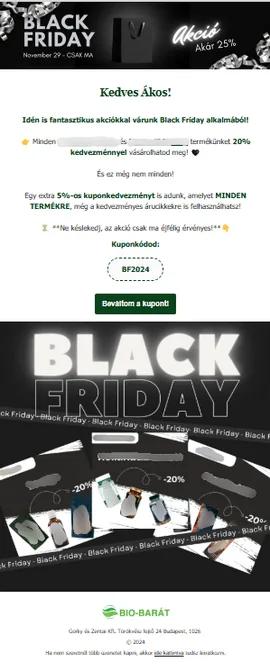
Morning email (BF2024:EMAIL:MORNING)
Timing: the first segment got it at 8:00 AM, then each further segment every 15 minutes.
Subject line (translated from Hungarian): “Black Friday until midnight today!”
Preheader: “Our sale products are only available for a limited time. Shop now!”
Content: I tried to send subscribers a short, to-the-point campaign launch message: what the discounts are, until when they can be used and on what.
Header CTA: home page; the three categories linked to their category pages
Button CTA: home page
Footer banner CTA: home page
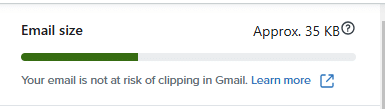
TIP: For every email, the size of the email is critically important. If you put too much content in it, the recipient’s email client (e.g. Gmail) may clip the email, or worse, even put it in spam. Always check the email in several email clients before sending!
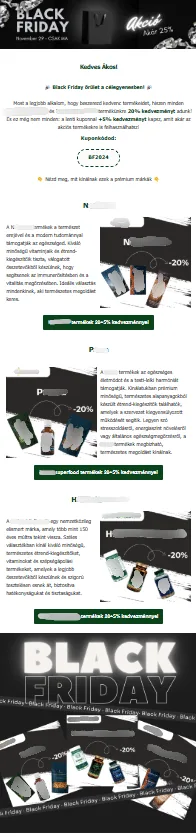
Afternoon email (BF2024:EMAIL:AFTERNOON)
Timing: the first send was at 1:30 PM, then every 15 minutes for each further segment.
Subject line (translated): “Today only, 25% off our N*****, P*** and H***** products!”
Preheader: “Don’t miss it!”
Content: I prepared the afternoon email in advance but didn’t schedule it, because I decided whether to send it after seeing the morning results. The point of the content was to present the 3 categories with a flat 20% discount, and to remind the reader of the extra 5% coupon.
Header CTA: home page; the three categories linked to their category pages
Button CTA: category pages
Footer banner CTA: home page
Evening email (BF2024:EMAIL:NIGHT)
Timing: the first send was at 6:45 PM, then every 15 minutes for each further segment.
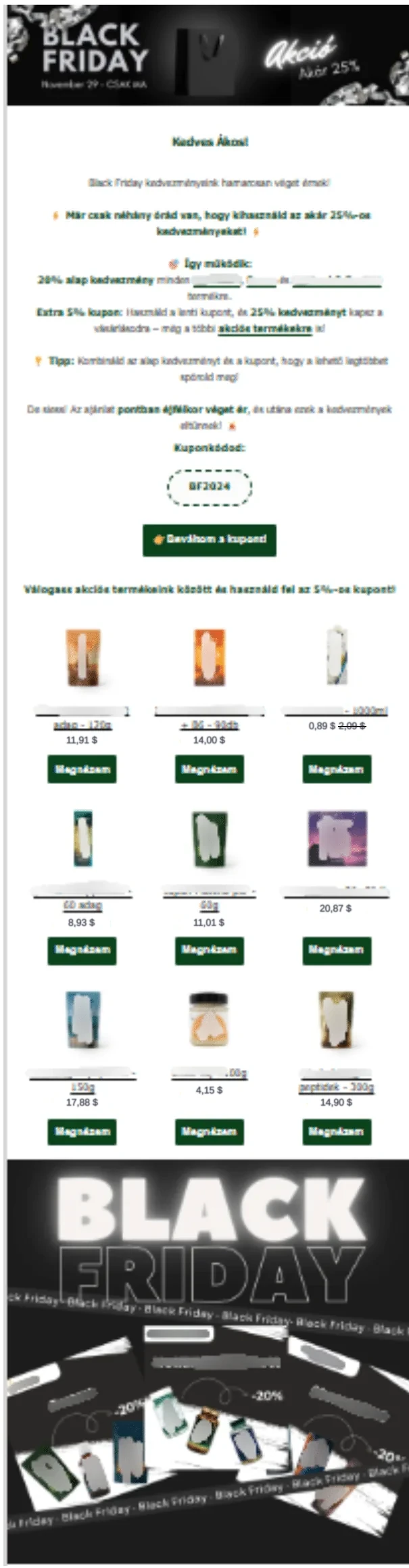
Subject line (translated): “Black Friday is ending soon!”
Preheader: “Discounts last until midnight”
Content: I built a dynamic product feed in which only discounted products could appear. I set the order to show the best-selling and most-viewed products of the last 90 days. I also put more emphasis on urgency.
Header CTA: home page; the three categories linked to their category pages
Button CTA: home page
Product buttons: the product’s page
Footer banner CTA: home page
Results
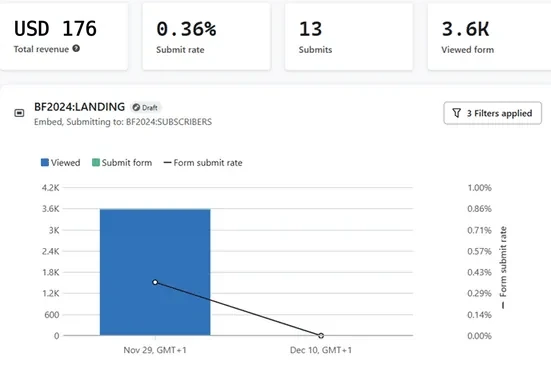
Form – BF2024:LANDING
Views: 3,598. Sign-ups: 13. Sign-up rate: 0.36%
Assessment: very low; the conversion rate is usually 5–10% on average.
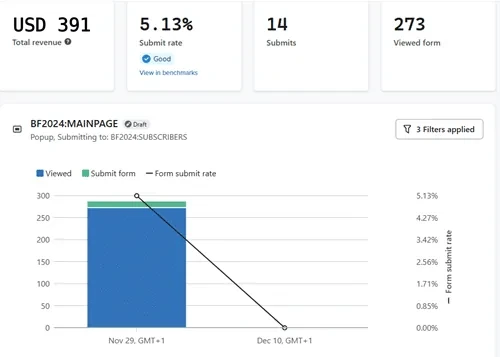
Home page popup – BF2024:MAINPAGE24:LANDING
Views: 273. Sign-ups: 14. Sign-up rate: 5.13%
Assessment: acceptable, since no extra traffic was driven to the site during the campaign. Email subscribers didn’t see the popup.
Subpage popup – BF2024:SUBPAGES
Views: 3,908. Sign-ups: 80. Sign-up rate: 2.05%. Assessment: very low.
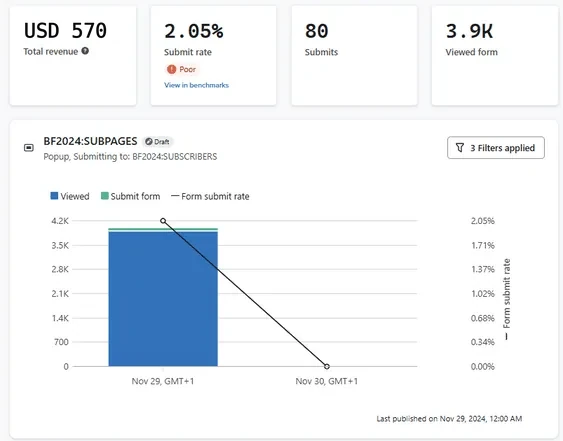
Conclusion: the popup graphics weren’t good enough, and I didn’t use the “teaser” feature, which could have increased sign-up rates.
Summary: during Black Friday we collected 107 new subscribers in total. The average number of daily subscribers is 100. The expected KPI was 150 subscribers, of which only 71% was achieved.
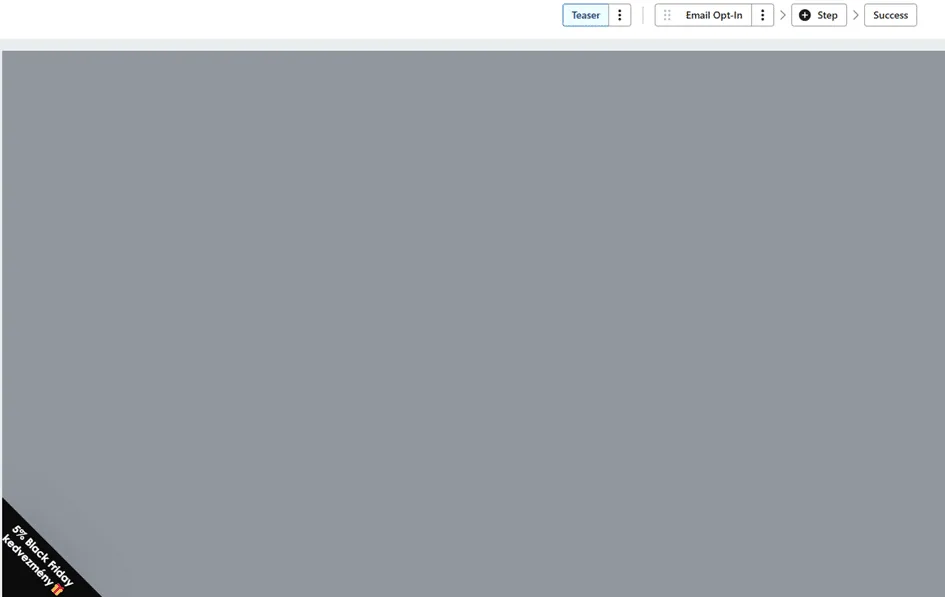
Teaser: if the visitor closed the popup without filling it in, a “teaser” appears in a position we choose, e.g. “Don’t forget your extra 5%!” That way they can subscribe at any time if they closed it by accident.
Flows
Post-sign-up flow – BF2024:SUBSCRIBED
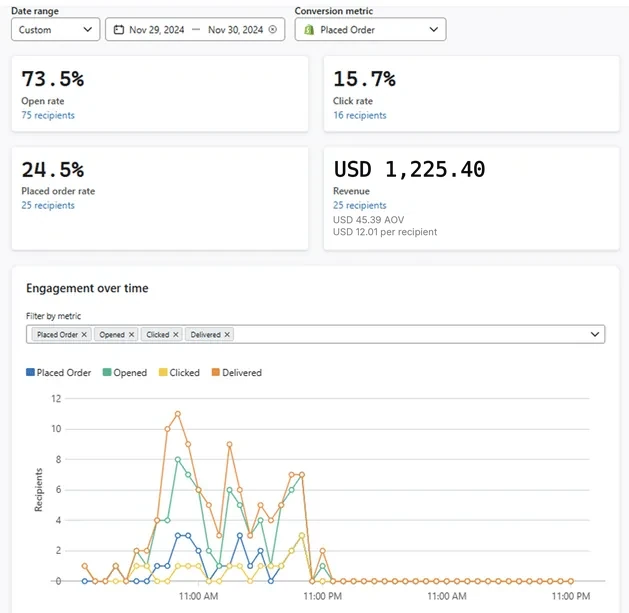
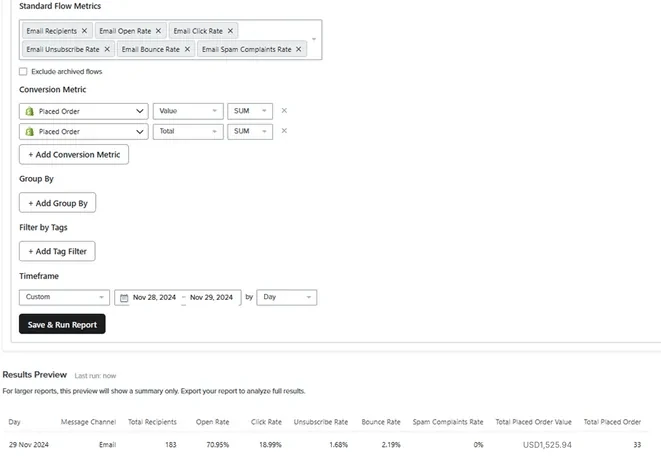
Total sends: 102. Open rate: 73.5%. Click rate: 15.7%. Unsubscribe rate: 2%. Bounce rate: 1.9%. Orders: 25. Order rate: 24.5%. Revenue: $1,225. Average order value: $49.01
Assessment: good. For this type of campaign, the open rate is usually at least 60%, the click-through rate around 10% and the order rate 10–15%. The statistics below show that most orders came in between 8 and 10 AM (7) and between 2 and 3 PM (4).
Abandoned cart – BF2024:ABANDONEDCART
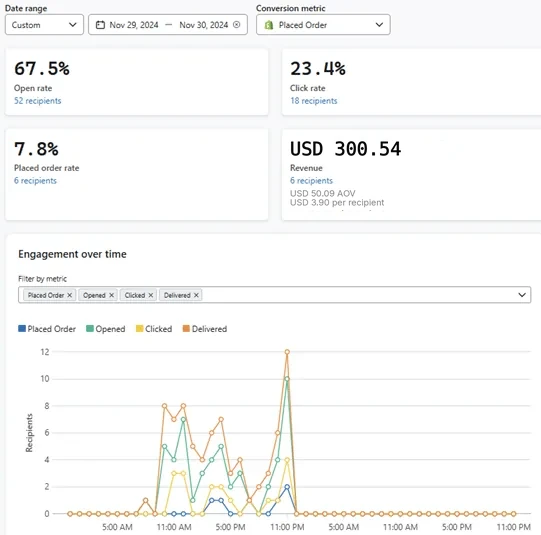
Total sends: 77. Open rate: 67.5%. Click rate: 23.4%. Unsubscribe rate: 1.3%. Bounce rate: 2.5%. Orders: 6. Order rate: 7.8%. Revenue: $300.54. Average order value: $50.09
Assessment: a little better than average. The open rate is somewhat higher than for an average abandoned cart email (40%), and the click rate is higher than the average 13%. The order rate is usually around 6%, so this also performed a little better.
Summary: during the Black Friday campaign, the two flows generated $1,526 in orders from 31 orders placed. That puts the average order value at $49.25, double the usual average order value. Only 51% of the expected $2,985 in revenue was achieved.
Conclusion: an abandoned cart flow with several emails could have increased conversions.
Campaigns
Morning – BF2024:EMAIL:MORNING
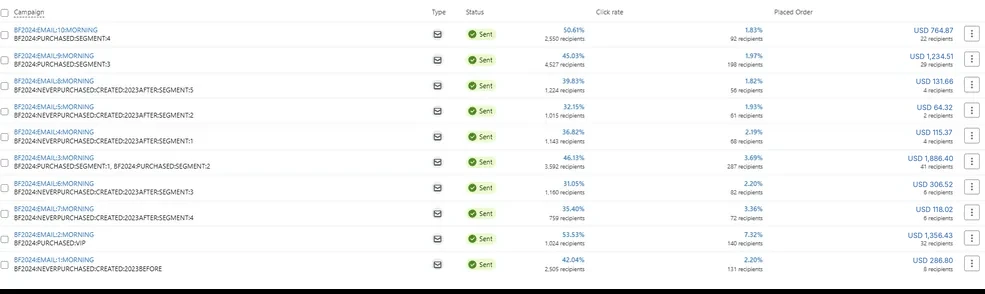
Total sends: 46,212. Open rate: 41.21%. Click rate: 2.85%. Unsubscribe rate: 1.09%. Bounce rate: 0.6%. Orders: 160. Order rate: 0.38%. Revenue: $6,265. Average order value: $39.16
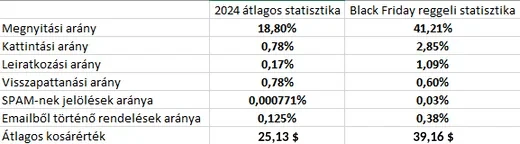

Assessment: the morning campaign’s results brought some surprises. 20% of email orders came from subscribers who had never bought from the store, and the highest average order value ($51.09) also came from this segment.
Compared with the average statistics of the earlier 2024 campaigns, the 55.8% increase in average order value stands out. We also managed to re-engage some people who had subscribed before January 1, 2023 and never bought since: this segment placed 9 orders worth $287.
Contrary to my expectations, unsubscribes didn’t rise significantly either, which often happens with campaigns like this.
In the morning campaign we far exceeded the annual average statistics.
Campaigns
Afternoon – BF2024:EMAIL:AFTERNOON
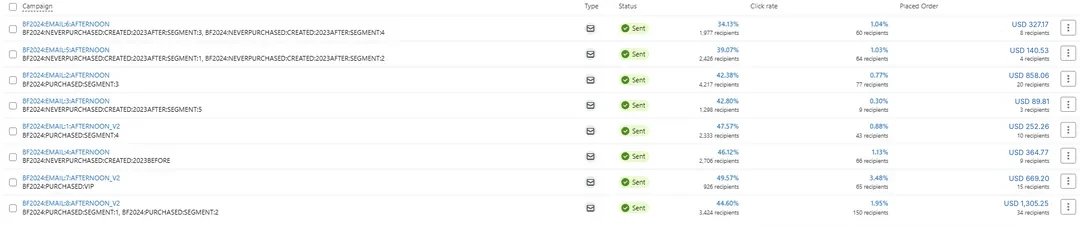
Total sends: 45,477. Open rate: 43.23%. Click rate: 1.32%. Unsubscribe rate: 1.10%. Bounce rate: 0.41%. Orders: 104. Order rate: 0.26%. Revenue: $4,007. Average order value: $38.53
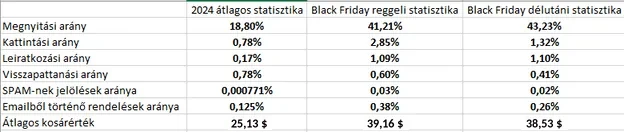
Based on the morning results, I sent the afternoon email too. Unsubscribes weren’t high, and no complaints came in to customer service.

Assessment: a slight drop was expected in the afternoon campaign, since it was the middle of a working day (the open rate rose, clicks fell). Among the segments, most purchases again came from people who had bought from the store before (76.9%).
This campaign held no big surprises, which is exactly why I made this email a little more substantial. If this email had also just said “use your coupon”, unsubscribes would have at least doubled compared with the morning send.
Campaigns
Evening – BF2024:EMAIL:NIGHT
Total sends: 44,809. Open rate: 41.29%. Click rate: 1.92%. Unsubscribe rate: 1.36%. Bounce rate: 0.33%. Orders: 142. Order rate: 0.4%. Revenue: $5,581. Average order value: $39.30


Assessment: the evening campaign performed similarly to the morning one. We can see that interest started to decline: compared with the morning send, the click-through rate fell by almost 1 percentage point and the unsubscribe rate rose.
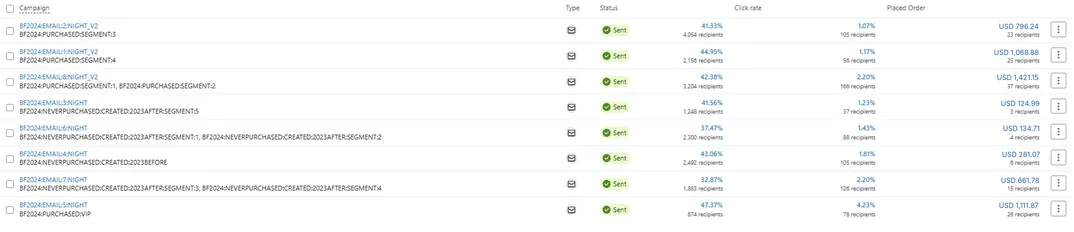
Comparing the three campaigns: the morning and evening campaigns performed almost equally, and they were the most successful. As I expected, the afternoon campaign performed the weakest.
This is probably because on a working day, during working hours, people read the message but don’t buy, because they don’t have time. The theory is supported by the fact that the afternoon campaign had the highest open rate but the lowest click-through rate and number of purchases.

Results
Flows
$1,526 – 33 orders – $46.24 average order value
Campaigns
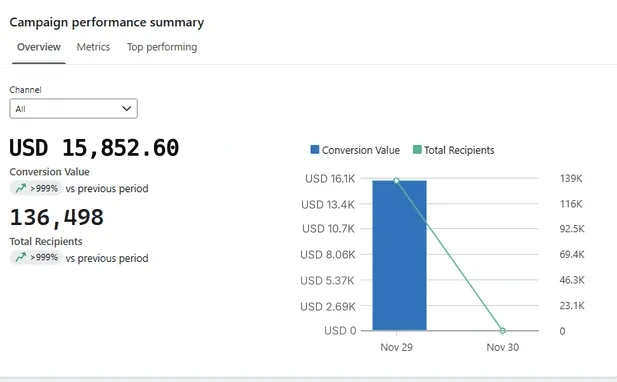
$15,853 – 406 orders – $39.04 average order value
Total
$17,379 – 439 orders – $42.64 average order value
Costs
Klaviyo: the Klaviyo monthly fee for November was $400. That is about $16 per day.
Fee: the amount I invoiced for the Black Friday campaign was $448.
Shopify: with Shopify Plus, the monthly fee is $2,300. That is about $90 per day.
Total: the full cost of the 2024 Black Friday campaign was about $555.
Mistakes and gaps
Unsubscribing: in campaigns like this I often add an alternative option to the unsubscribe block at the bottom of the email: “If you don’t want to take part in the Black Friday sale, click here.” The “click here” link leads to an opt-out landing page, and the person is added to a “BF:OPTED-OUT” segment. I exclude this segment from every campaign send.
With this solution, readers don’t unsubscribe from the whole list, only from that particular campaign. A setting like this could even have reduced unsubscribes significantly. Unfortunately, this step was left out of this Black Friday campaign.
Segmentation and personalized messages: unfortunately, there wasn’t enough capacity to work with more detailed segmentation or to write different messages for the different target groups. I’m convinced that with proper preparation we could have achieved results at least 20% better.
A/B testing: it really pains me that I didn’t run an A/B test during the campaign. Those who have worked with me know that “I think” isn’t part of my vocabulary – I base decisions on data only. A/B tests here would not only have made this campaign more effective, but also given valuable lessons for similar campaigns in the future.
Creatives: designing graphics isn’t one of my strengths, but I usually give precise briefs from which a designer colleague produces the materials. This time, unfortunately, that wasn’t possible, which had a noticeable effect on the final result.
No landing page: because of the lack of time, no separate Black Friday page was made this year, which was a significant challenge for the campaign. A dedicated landing page would not only have made the offers clearer and more appealing, but would probably also have increased the campaign’s effectiveness significantly.
Flows: one gap is that no further emails were made for the two existing flows, which could have helped increase conversions. I had also planned two more flows: one for people who added a product to the cart but didn’t start checkout, and another for people who viewed a product but didn’t add it to the cart or start a purchase. Unfortunately, because of the lack of time, these weren’t built.
Dark mode optimization: today, almost every mobile device switches to “dark mode” automatically in the evening, to be easier on the eyes. This matters in email marketing too, because what looks good “normally” is often hard to see in dark mode. This year the Black Friday emails weren’t optimized for dark mode.
Interesting facts
Coupon use: the coupon was active from midnight to midnight, and of the 439 orders from email, it was redeemed in only 282, which is 64%. There can be two reasons: either people simply forgot to use it, or the coupon wasn’t communicated well enough.

Traffic: the chart below clearly shows when the emails were sent, and how differently the afternoon email performed compared with the morning one.
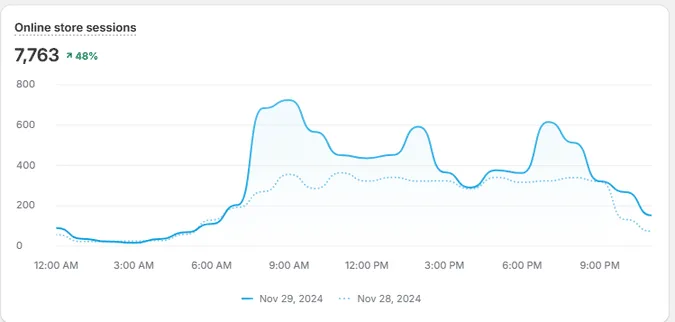
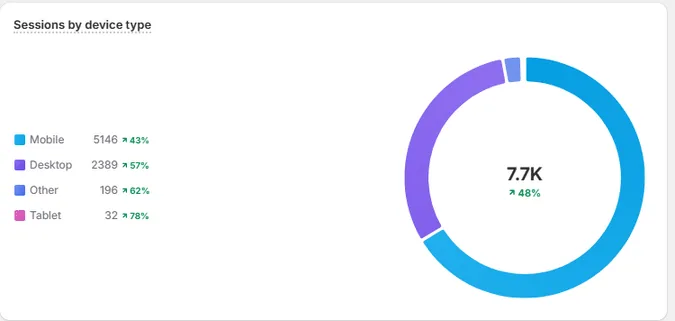
Mobile vs. desktop: here too, you can see perfectly how important it is to optimize content for every device.